 Striving for precision may seem like a desirable trait, but research suggests extreme perfectionism is a risk factor for depression, anxiety and eating disorders.
We live in a world dominated by the pursuit of perfection. From how we perform at school and in the workplace, to whether we win a social game of tennis and even how we choose romantic partners and raise our kids, achieving top marks or the best possible outcome has come to define our understanding of success. There’s no doubt that setting goals and having high expectations is a healthy pattern of behaviour, but when these habits are taken to an extreme level it can increase the risk of some of our most common mental health problems. By Maria Tedesco - Clinical Psychologist  Christmas, for some people, is a time for family, friends, gifts and holidays. It can also be a time for spirituality, reflection and prayer. Yet, for many it is a difficult time, and there are reasons why this may be the case.
Christmas can be a time of expectation and pressure. Families are supposed to “get along”, and this is not always possible. Some families have endured trauma or conflict amongst their members. There is nothing like the expectation and pressure of Christmas to place a magnifying glass on family feuds, fallouts and breakups. For some, who have experienced bereavement through loss, divorce or separation it can be a very difficult time. Often a Christmas without the person we once loved is a painful time, and a deep ‘solitary sadness’ can be experienced. We understand how important it is to provide real emotional and professional support to people experiencing a hard time during the Christmas holidays period. Clinical psychologists Teresa D’Amato and Maria Tedesco at Thinkwell Psychology are available for consultations during the Christmas period as follows: The team of therapists at Thinkwell Psychology is available for consultations as follows:
Bookings can be made by phone (6361 1275) or online.  You haven’t showered in a few days, and you haven’t brushed your teeth yet this morning.
But, your baby is one month old today! You picked out the perfect outfit and made sure the lighting was just right for the perfect photo. You posted the best one on Facebook this morning, and you keep checking to see if anyone has “liked” the picture. But, after scrolling through the “likes” and comments, you notice that your mother-in-law, who is always online, hasn’t responded to the picture of her darling grandbaby yet. Why not? What gives? Perhaps she didn’t see it yet…or maybe she doesn’t like the baby’s outfit. Maybe she thinks you’re not a good mother. And what about that friend of yours from high school? You always “like” and comment on the photos of her kids…why hasn’t she acknowledged your baby’s photo? Perhaps you aren’t such a good mother after all. To some, this scenario might sound ridiculous, but it is a real and frequent consequence of being a new mother and sharing on Facebook. So, when one of my graduate students approached me about creating and including a survey about new parents’ social networking in my latest parenting study, the New Parents Project, I jumped at the chance. I was interested in how often new parents used social networking sites, why some used them more than others, and what the impact might be on new parents’ mental health. Here are some things we found. 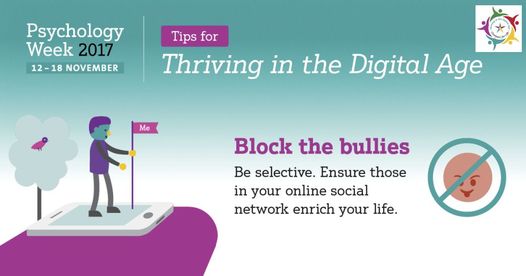 Anti-social behaviour online – trolling, cyberbullying – is a growing concerning phenomenon but research shows ignoring these mostly faceless angry attention-seekers could be the best response.
Almost half the population of the planet now has access to the internet, with about one in three of those people regularly active on social media. But this increased opportunity to socialise and communicate in a virtual environment has offered new avenues for antisocial behaviour. The problem of cyberbullying has received considerable research attention. However, other online antisocial behaviours with similarly harmful outcomes have received far less consideration – one example being anonymous online trolling. By Teresa D'Amato - Senior Clinical Psychologist MAPS, MACPA, MIACN  Thriving in the digital age requires making the most of our ability to connect but avoiding overload, according to the Australian Psychological Society, which has released tips for evading the pitfalls of the online world for Psychology Week 2017. Psychology Week is an annual initiative of the Australian Psychological Society that aims to increase public awareness of how psychology can help Australians lead healthier, happier and more meaningful lives. This year the focus will be Thriving in the digital age and ways to help Australians improve their happiness and wellbeing.
Social media has become a really important means of communicating and is basically integral to most of our lives in one form or other. However, we have also seen it affect people’s behaviour in some less than positive ways. Disagreeing and name calling have become common online and that behaviour can easily become anti-social drifting into trolling, stalking or cyberbullying, while constant notifications can leave us anxious and distracted. Here are 8 simple strategies that can help ensure you have a positive experience online and you aren’t being ruled by your technology. BY THE PSYCHLOPAEDIA TEAM - THE AUSTRALIAN PSYCHOLOGICAL SOCIETY  Photo source: Freepik Incidences of bullying are occurring in preschools. With bullying linked to a range of poor outcomes in adulthood, psychologists are urging schools to adopt best practice to protect students.
Addressing bullying in schools is an important preventative health measure but many schools are failing to adopt the most promising psychological processes. Helen McGrath MAPS, a psychologist and educator who is a member of the National Centre Against Bullying, said that schools are struggling to identify and contend with the concerning behaviour. While most schools are addressing the challenge head-on, some are failing to adopt nationally recognised anti-bullying principles.
BY THE PSYCHLOPAEDIA TEAM - THE AUSTRALIAN PSYCHOLOGICAL SOCIETY
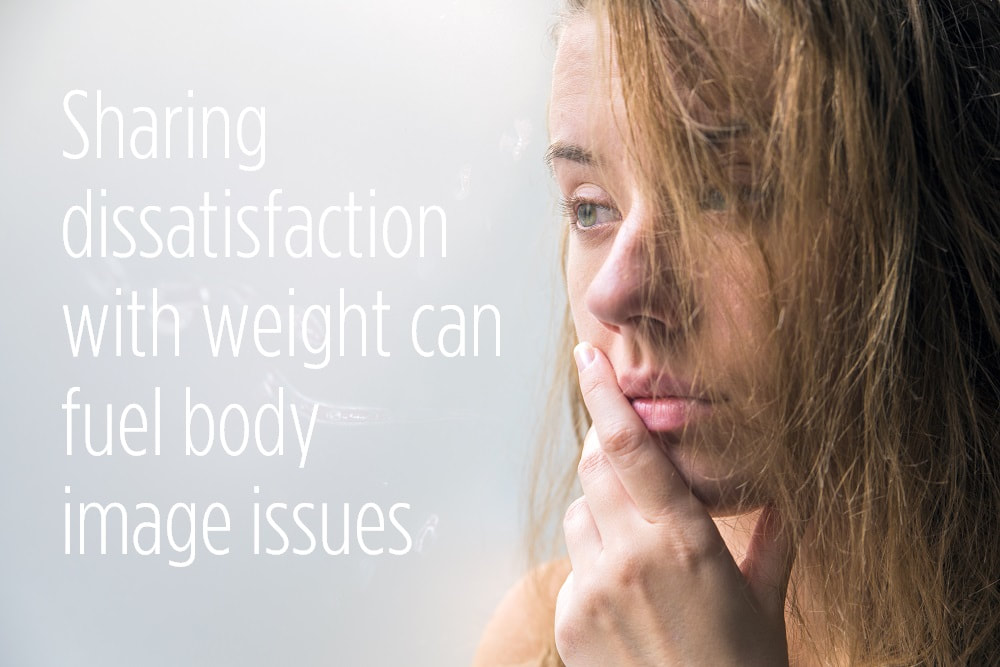
Photo source: Designed by Dragana_Gordic / Freepik
Complaining to friends about flabby arms or big thighs can incite comparison with other women and cultivate body dissatisfaction.
“My arms are so flabby.”
“I hate my thighs.” “My stomach is too big.” How often do you or women you know engage in this sort of ‘fat talk’? According to one recent Australian study, it happens much more often than you might think. The research reveals that during an average week four out of five young women experience ‘fat talk’ about their appearance or another person’s. And even though it might seem like a harmless way to alleviate body dissatisfaction, the opposite is true – fat talk can have a negative effect on body image.
By Maria Tedesco - Clinical Psychologist

One of the most significant experiences for any person is heartbreak. The loss of a loved one through divorce or separation impacts the psychological well-being of a person in a way probably best described by writers, poets and musicians. Why? Because they have a way of capturing the emotional turbulence entwined with the processes of "Falling out of Love".
When you fall out of love,
your soul drowns into a bath of suffocation. It wanders, lost in a realm of pain and heartache, worse than any imaginable nightmare (Logan LaFetch 2013) |
Categories
All
|

- Home
- Services
-
Approaches
- Cognitive Behaviour Therapy (CBT)
- Interpersonal Psychotherapy (IPT)
- Mindfulness
- Mindfulness-Based Cognitive Therapy
- Acceptance and Commitment Therapy (ACT)
- Dialectical Behaviour Therapy (DBT)
- Neuropsychotherapy
- Schema Focused Therapy
- Eye movement desensitization and reprocessing (EMDR)
- Emotion Focused Therapy (EFT)
- Our Team
- NEWS
- Booking
- Contact
 RSS Feed

|
15B / 550 CANNING HIGHWAY ATTADALE (ATTADALE BUSINESS CENTRE) PH: (08) 6361 1275 | FAX: (08) 6361 1318 |


|

|

|
Copyright ©2023 Thinkwell Psychology. All rights reserved.
Website developed by Ablaze Marketing