 Striving for precision may seem like a desirable trait, but research suggests extreme perfectionism is a risk factor for depression, anxiety and eating disorders.
We live in a world dominated by the pursuit of perfection. From how we perform at school and in the workplace, to whether we win a social game of tennis and even how we choose romantic partners and raise our kids, achieving top marks or the best possible outcome has come to define our understanding of success. There’s no doubt that setting goals and having high expectations is a healthy pattern of behaviour, but when these habits are taken to an extreme level it can increase the risk of some of our most common mental health problems. By Maria Tedesco - Clinical Psychologist  Christmas, for some people, is a time for family, friends, gifts and holidays. It can also be a time for spirituality, reflection and prayer. Yet, for many it is a difficult time, and there are reasons why this may be the case.
Christmas can be a time of expectation and pressure. Families are supposed to “get along”, and this is not always possible. Some families have endured trauma or conflict amongst their members. There is nothing like the expectation and pressure of Christmas to place a magnifying glass on family feuds, fallouts and breakups. For some, who have experienced bereavement through loss, divorce or separation it can be a very difficult time. Often a Christmas without the person we once loved is a painful time, and a deep ‘solitary sadness’ can be experienced. We understand how important it is to provide real emotional and professional support to people experiencing a hard time during the Christmas holidays period. Clinical psychologists Teresa D’Amato and Maria Tedesco at Thinkwell Psychology are available for consultations during the Christmas period as follows: The team of therapists at Thinkwell Psychology is available for consultations as follows:
Bookings can be made by phone (6361 1275) or online.  You haven’t showered in a few days, and you haven’t brushed your teeth yet this morning.
But, your baby is one month old today! You picked out the perfect outfit and made sure the lighting was just right for the perfect photo. You posted the best one on Facebook this morning, and you keep checking to see if anyone has “liked” the picture. But, after scrolling through the “likes” and comments, you notice that your mother-in-law, who is always online, hasn’t responded to the picture of her darling grandbaby yet. Why not? What gives? Perhaps she didn’t see it yet…or maybe she doesn’t like the baby’s outfit. Maybe she thinks you’re not a good mother. And what about that friend of yours from high school? You always “like” and comment on the photos of her kids…why hasn’t she acknowledged your baby’s photo? Perhaps you aren’t such a good mother after all. To some, this scenario might sound ridiculous, but it is a real and frequent consequence of being a new mother and sharing on Facebook. So, when one of my graduate students approached me about creating and including a survey about new parents’ social networking in my latest parenting study, the New Parents Project, I jumped at the chance. I was interested in how often new parents used social networking sites, why some used them more than others, and what the impact might be on new parents’ mental health. Here are some things we found. BY THE PSYCHLOPAEDIA TEAM - THE AUSTRALIAN PSYCHOLOGICAL SOCIETY 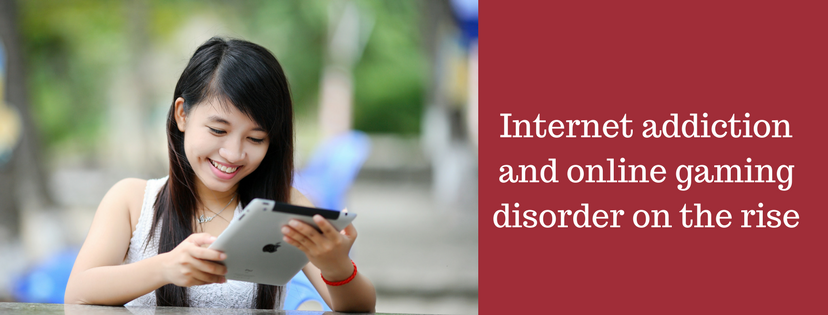 In our modern world, the internet has become an integral part of our daily lives, enabling us to be more connected and efficient than ever before.
But our move online has also resulted in the serious and growing global phenomenon of internet addiction. What is internet addiction? Internet addiction manifests when excessive internet use starts to affect someone’s life, causing impairment or distress. There are various types of internet addiction, from social networking and gambling to pornography and gaming. Internet gaming addiction, also known as Internet Gaming Disorder (IGD), is now recognised as a mental health condition that can have major consequences for an individual’s wellbeing. Dr Vasileios Stavropoulos, a senior lecturer in clinical psychology and coordinator of the Gaming Research Group at Federation University Australia, says six criteria must be met in order for excessive internet gaming to be classed as an addiction. 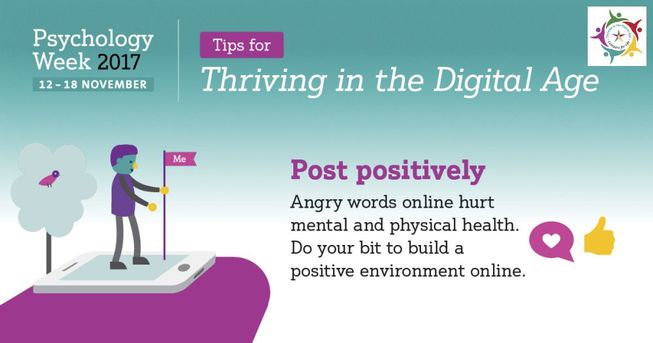 “22 of the Cutest Baby Animals,” the headline said. “You won’t believe number 11!”
Despite an impending deadline – not to mention my skepticism (how cute could they possibly be?) – I clicked on the story. I’m only human, after all. Yet this failure in self-regulation cost me at least half an hour of good work time – as have other clickbait headlines, bizarre images on my Twitter feed or arguments on Facebook. The insidious, distracting suck of the Internet has become seemingly inescapable. Calling us from our pockets, lurking behind work documents, it’s merely a click away. Studies have shown that each day we spend, on average, five and a half hours on digital media, and glance at our phones 221 times. Meanwhile, the developers of websites and phone apps all exploit human behavioral tendencies, designing their products and sites in ways that attract our gaze – and retain it. Writing for Aeon, Michael Schulson points out, developers have staked their futures on methods to cultivate habits in users, in order to win as much of that attention as possible. Given the Internet’s omnipresence and its various trappings, is it even possible to rein in our growing Internet consumption, which often comes at the expense of work, family or relationships? Psychological research on persuasion and self-control suggests some possible strategies.  We all like to help others. But, when it comes to mental health, what steps can we take to support ourselves?
Psychological research has revealed a range of approaches that can help you stay mentally healthy and make the most out of your life.
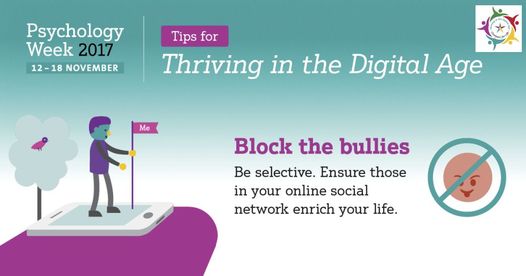 Anti-social behaviour online – trolling, cyberbullying – is a growing concerning phenomenon but research shows ignoring these mostly faceless angry attention-seekers could be the best response.
Almost half the population of the planet now has access to the internet, with about one in three of those people regularly active on social media. But this increased opportunity to socialise and communicate in a virtual environment has offered new avenues for antisocial behaviour. The problem of cyberbullying has received considerable research attention. However, other online antisocial behaviours with similarly harmful outcomes have received far less consideration – one example being anonymous online trolling. 
Jocelyn Brewer MAPS introduces us to the concept of Digital Nutrition, an award-winning framework for teaching the principles of a healthy, balanced relationship with technology.
Digital nutrition borrows from the healthy eating pyramid and food nutrition principles to communicate key concepts around screen-time limits, digital citizenship and impulse control, and evaluates the cognitive benefits of apps and games. It is not about a digital ‘diet’ or ‘detox’, but about a positive, long term relationship with cyberspace that allows us to get the best out of technology, while avoiding the pitfalls of ‘internet addiction’. Are there healthy life choices for digital consumption? Are there digital superfoods? #psychweek 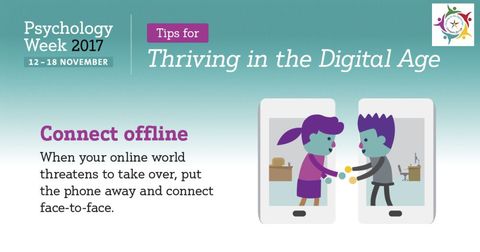 Many of us welcome easy access to technology, lured by the promise of better connection with others, greater engagement and a more efficient life.
But psychological research confirms that social media can actually increase stress, disconnection, inefficiency and feelings of inadequacy. So how can we harness technology to boost wellbeing and create a healthy digital life? By Teresa D'Amato - Senior Clinical Psychologist MAPS, MACPA, MIACN 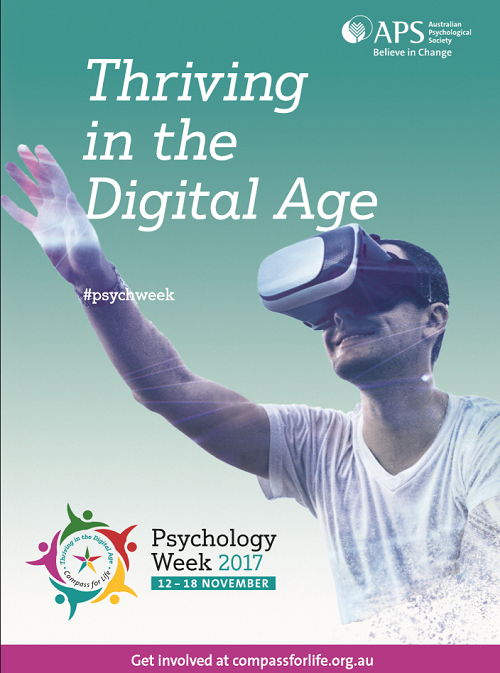 Thriving in the digital age requires making the most of our ability to connect but avoiding overload, according to the Australian Psychological Society, which has released tips for evading the pitfalls of the online world for Psychology Week 2017. Psychology Week is an annual initiative of the Australian Psychological Society that aims to increase public awareness of how psychology can help Australians lead healthier, happier and more meaningful lives. This year the focus will be Thriving in the digital age and ways to help Australians improve their happiness and wellbeing.
Social media has become a really important means of communicating and is basically integral to most of our lives in one form or other. However, we have also seen it affect people’s behaviour in some less than positive ways. Disagreeing and name calling have become common online and that behaviour can easily become anti-social drifting into trolling, stalking or cyberbullying, while constant notifications can leave us anxious and distracted. Here are 8 simple strategies that can help ensure you have a positive experience online and you aren’t being ruled by your technology. |
Categories
All
|

- Home
- Services
-
Approaches
- Cognitive Behaviour Therapy (CBT)
- Interpersonal Psychotherapy (IPT)
- Mindfulness
- Mindfulness-Based Cognitive Therapy
- Acceptance and Commitment Therapy (ACT)
- Dialectical Behaviour Therapy (DBT)
- Neuropsychotherapy
- Schema Focused Therapy
- Eye movement desensitization and reprocessing (EMDR)
- Emotion Focused Therapy (EFT)
- Our Team
- NEWS
- Booking
- Contact
 RSS Feed

|
15B / 550 CANNING HIGHWAY ATTADALE (ATTADALE BUSINESS CENTRE) PH: (08) 6361 1275 | FAX: (08) 6361 1318 |


|

|
|
Copyright ©2023 Thinkwell Psychology. All rights reserved.
Website developed by Ablaze Marketing