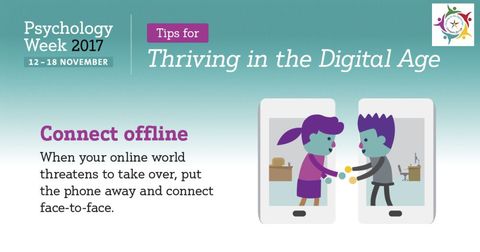
 Many of us welcome easy access to technology, lured by the promise of better connection with others, greater engagement and a more efficient life.
But psychological research confirms that social media can actually increase stress, disconnection, inefficiency and feelings of inadequacy. So how can we harness technology to boost wellbeing and create a healthy digital life? BY THE PSYCHLOPAEDIA TEAM - THE AUSTRALIAN PSYCHOLOGICAL SOCIETY  Photo source: Freepik Incidences of bullying are occurring in preschools. With bullying linked to a range of poor outcomes in adulthood, psychologists are urging schools to adopt best practice to protect students.
Addressing bullying in schools is an important preventative health measure but many schools are failing to adopt the most promising psychological processes. Helen McGrath MAPS, a psychologist and educator who is a member of the National Centre Against Bullying, said that schools are struggling to identify and contend with the concerning behaviour. While most schools are addressing the challenge head-on, some are failing to adopt nationally recognised anti-bullying principles.  Insights from positive psychology reveal the factors that can help people be happier and more satisfied.
Wellbeing has many facets. One theory of wellbeing – set out by Martin Seligman, one of the pioneers of positive psychology, in his 2012 book Flourish – identified five key elements which underpin people’s happiness and life satisfaction. These are positive emotion, engagement, relationships, meaning and accomplishment, or PERMA for short. Psychologists have since built on this, adding a plus – healthy behaviours – which also contribute to wellbeing. Though we live in a complex and demanding world, people may experience higher levels of wellbeing if they focus on these important factors in life.
Natural disasters, like floods and bush fires, are a frequent occurrence in Australia. Research has shown they have deep emotional and psychological impacts on people and communities involved.
DR SUSIE BURKE FAPS is a Senior Psychologist with the AUSTRALIAN PSYCHOLOGICAL SOCIETY. In this video, she talks about how to care for people's needs after such traumatic events and help them on the road of recovery after a natural disaster.
BY THE PSYCHLOPAEDIA TEAM - THE AUSTRALIAN PSYCHOLOGICAL SOCIETY

Photo source: Designed by Dragana_Gordic / Freepik
Complaining to friends about flabby arms or big thighs can incite comparison with other women and cultivate body dissatisfaction.
“My arms are so flabby.”
“I hate my thighs.” “My stomach is too big.” How often do you or women you know engage in this sort of ‘fat talk’? According to one recent Australian study, it happens much more often than you might think. The research reveals that during an average week four out of five young women experience ‘fat talk’ about their appearance or another person’s. And even though it might seem like a harmless way to alleviate body dissatisfaction, the opposite is true – fat talk can have a negative effect on body image.
By Maria Tedesco - Clinical Psychologist

One of the most significant experiences for any person is heartbreak. The loss of a loved one through divorce or separation impacts the psychological well-being of a person in a way probably best described by writers, poets and musicians. Why? Because they have a way of capturing the emotional turbulence entwined with the processes of "Falling out of Love".
When you fall out of love,
your soul drowns into a bath of suffocation. It wanders, lost in a realm of pain and heartache, worse than any imaginable nightmare (Logan LaFetch 2013) How neuroscience applied to psychotherapy can improve our mental health and overall well-being6/24/2017
By Teresa D'Amato - Senior Clinical Psychologist MAPS, MACPA, MIACN 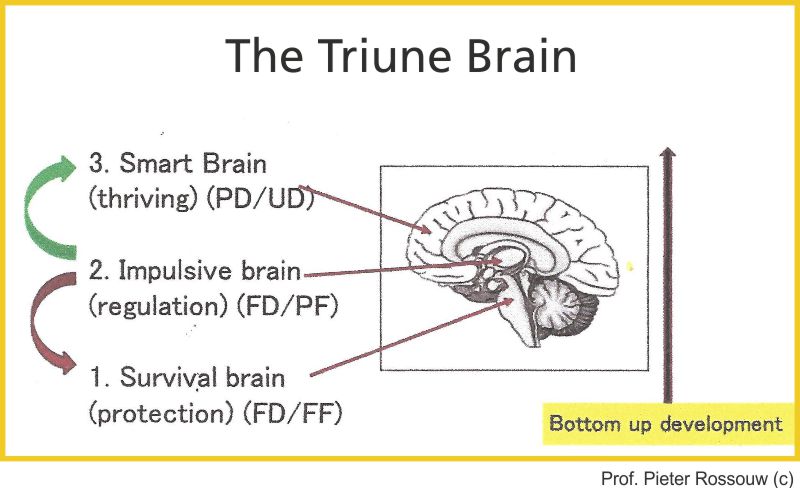 Welcome to winter and the middle of the year! I hope the first half of the year has been filled with experiences that have been enjoyable and/or experiences that we can learn and grow from.
I've recently attended the first International Conference of Neuropsychotherapy and pre-conference workshops, held at the Royal Brisbane and Women’s Hospital in Brisbane from 23 to 26 May 2017. The conference was brought about from an ever increasing global interest of professionals working from a brain-based perspective. The main theme of the conference was "Neuroscience Research to Applied Practice" and focused on scientific evidence-based research and its practical application in various domains including: psychopathology, resilience, pain, grief and loss, sport and performance maximisation, attachment and development through the lifespan, education and wellness. Leading world renowned experts from Australia, Canada, USA, South Africa, United Kingdom, Singapore, Indonesia and New Zealand addressed the attendees in their specialist field. Recent Neuroscience research has given us an understanding into the many factors that improve mental health and well-being. Neuropsychotherapy focuses on the neural processes that underpin human responses including memory, thoughts, sensations, behaviors, emotions, and social interactions and it gives guidelines and strategies to address unhelpful functioning in these areas and improve overall wellbeing based on current neuroscience research findings. |
Categories
All
|

- Home
- Services
-
Approaches
- Cognitive Behaviour Therapy (CBT)
- Interpersonal Psychotherapy (IPT)
- Mindfulness
- Mindfulness-Based Cognitive Therapy
- Acceptance and Commitment Therapy (ACT)
- Dialectical Behaviour Therapy (DBT)
- Neuropsychotherapy
- Schema Focused Therapy
- Eye movement desensitization and reprocessing (EMDR)
- Emotion Focused Therapy (EFT)
- Our Team
- NEWS
- Booking
- Contact
 RSS Feed

|
15B / 550 CANNING HIGHWAY ATTADALE (ATTADALE BUSINESS CENTRE) PH: (08) 6361 1275 | FAX: (08) 6361 1318 |


|

|

|
Copyright ©2023 Thinkwell Psychology. All rights reserved.
Website developed by Ablaze Marketing